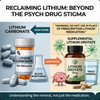
When most people hear the word lithium, they think of heavy psychiatric medication with serious side effects and strict monitoring requirements. That association is understandable — and it's also making people dismiss one of the most intriguing mineral supplements in brain health research.
Prescription Lithium vs. Supplemental Lithium Orotate
Prescription lithium carbonate is typically dosed at 600 to 1,800mg per day for conditions like bipolar disorder. At those doses, it requires blood monitoring, can affect kidney and thyroid function over time, and has a narrow therapeutic window. That's the lithium most people are thinking of.
Lithium orotate supplements are an entirely different conversation. They typically provide 5 to 20mg of elemental lithium — a fraction of a percent of the prescription dose. At these levels, the pharmacological profile is completely different. The concerns about kidney toxicity and thyroid effects at prescription doses don't apply at supplemental doses.
The key question is whether these low doses actually do anything meaningful. The evidence suggests they do.
What Population Studies Reveal
Some of the most compelling evidence for low-dose lithium comes from population studies examining naturally occurring lithium in drinking water. Regions with higher naturally occurring lithium levels in water supplies consistently show lower rates of suicide, depression, and in some studies, dementia — and these associations hold up across multiple countries and decades of data.
These aren't small findings. They're replicated across geographic regions and decades of data. While population data can't prove causation, the consistency of these findings is striking and has driven significant research interest.
How Low-Dose Lithium Works in the Brain
It inhibits glycogen synthase kinase-3B, an enzyme involved in mood regulation and neuroinflammation. This is one of the key mechanisms also targeted by some antidepressant medications.
It upregulates brain-derived neurotrophic factor and insulin-like growth factor-1, both of which support neuroplasticity — the brain's ability to form and maintain connections.
It modulates the nervous system in ways that reduce stress-related inflammation and enhance brain resilience under chronic stress.
Clinicians working with low-dose lithium orotate report that patients often experience less irritability, better emotional regulation, improved sleep quality, and a reduction in the kind of low-grade anxiety that's hard to name but easy to feel.
Who Should Consider Lithium Orotate
Based on the available research and clinical observations, low-dose lithium orotate may be worth considering for:
Mood instability — not necessarily bipolar disorder, but general emotional reactivity and irritability that feels hard to manage.
Persistent anxiety — especially when other approaches haven't moved the needle.
Brain health support — individuals looking for a trace mineral approach as part of a broader wellness strategy.
It is not a replacement for psychiatric medication in cases of diagnosed bipolar disorder or severe depression. Those require proper clinical management.
My Clinical Perspective
In my practice, I've found lithium orotate to be one of those supplements that quietly makes a noticeable difference for certain patients — particularly those with mood instability and anxiety who are looking for something beyond basic interventions.
I carry Lithium Orotate in our store and typically start patients at a low dose to assess tolerance before adjusting. As with any supplement with neurological effects, it's worth discussing with a practitioner who knows your full health picture.
The Bottom Line
Lithium orotate is not the scary psychiatric drug most people imagine. At low supplemental doses, it's a trace mineral with a growing body of evidence for mood support, neuroprotection, and brain health.
If you've been struggling with mood stability, anxiety, or just want to explore evidence-based brain health support, it's worth an honest look.
Work With Me
If you'd like to discuss whether lithium orotate is right for your situation, I offer consultations through Master The Body.
Book a Free Discovery Call →
Ready for a deeper dive? Schedule an Initial Comprehensive Consultation (60 min) →
Dr. Lorn Allison, DN — Board-Certified Naprapath | Founder, Master The Body
Sources
- FPNotebook. Lithium Carbonate – dosing, monitoring, and maintenance levels in bipolar disorder. 2018.
- DrOracle. What are the safety and efficacy concerns with using lithium orotate? 2025.
- Kessing LV, et al. Association of lithium in drinking water with dementia incidence. JAMA Psychiatry. 2017.
- Mines MA, Jope RS. GSK‑3 as a target for lithium‑induced neuroprotection against excitotoxicity in neuronal cultures. J Neurochem. 2011;119(3):521‑532.